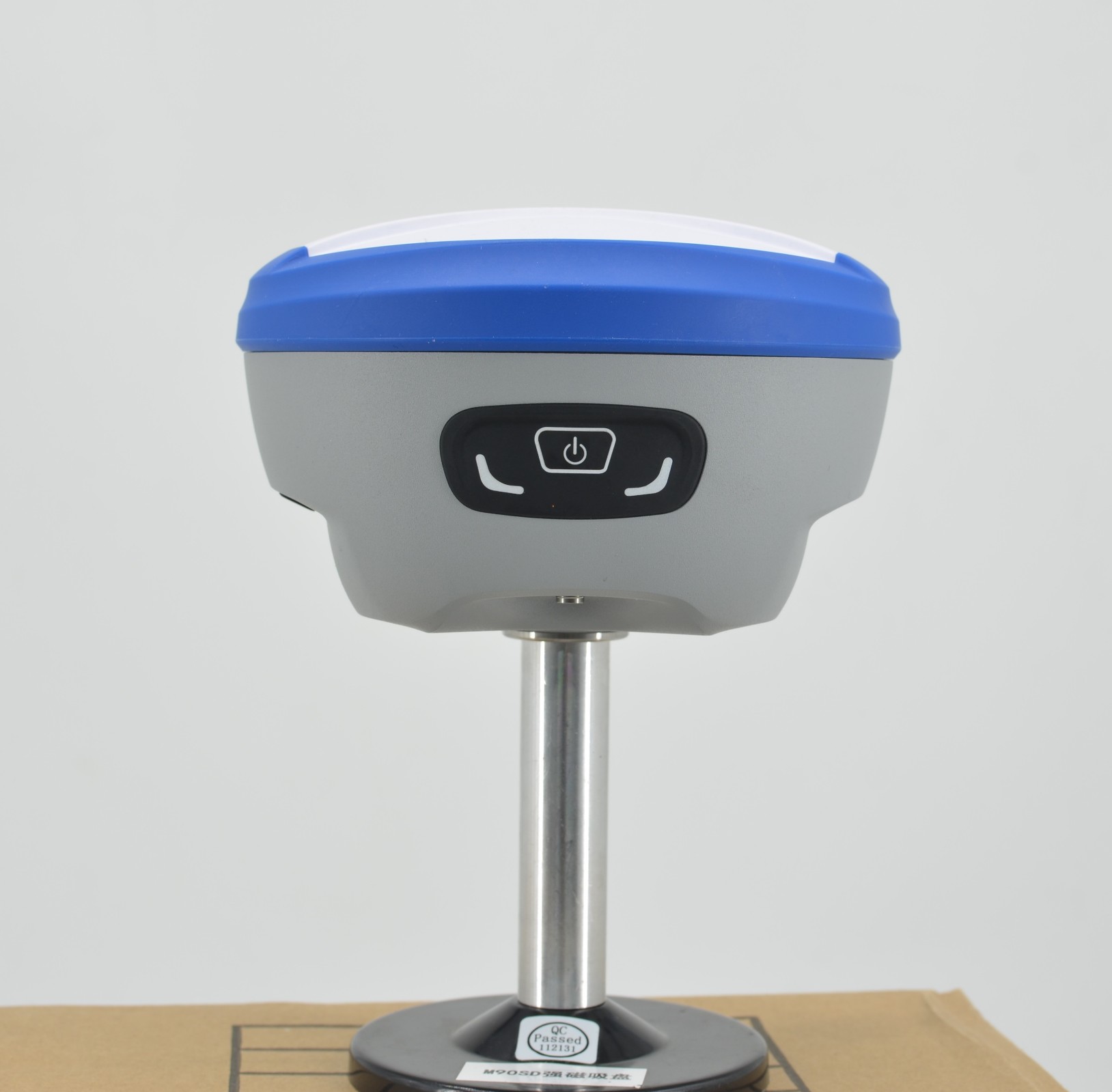
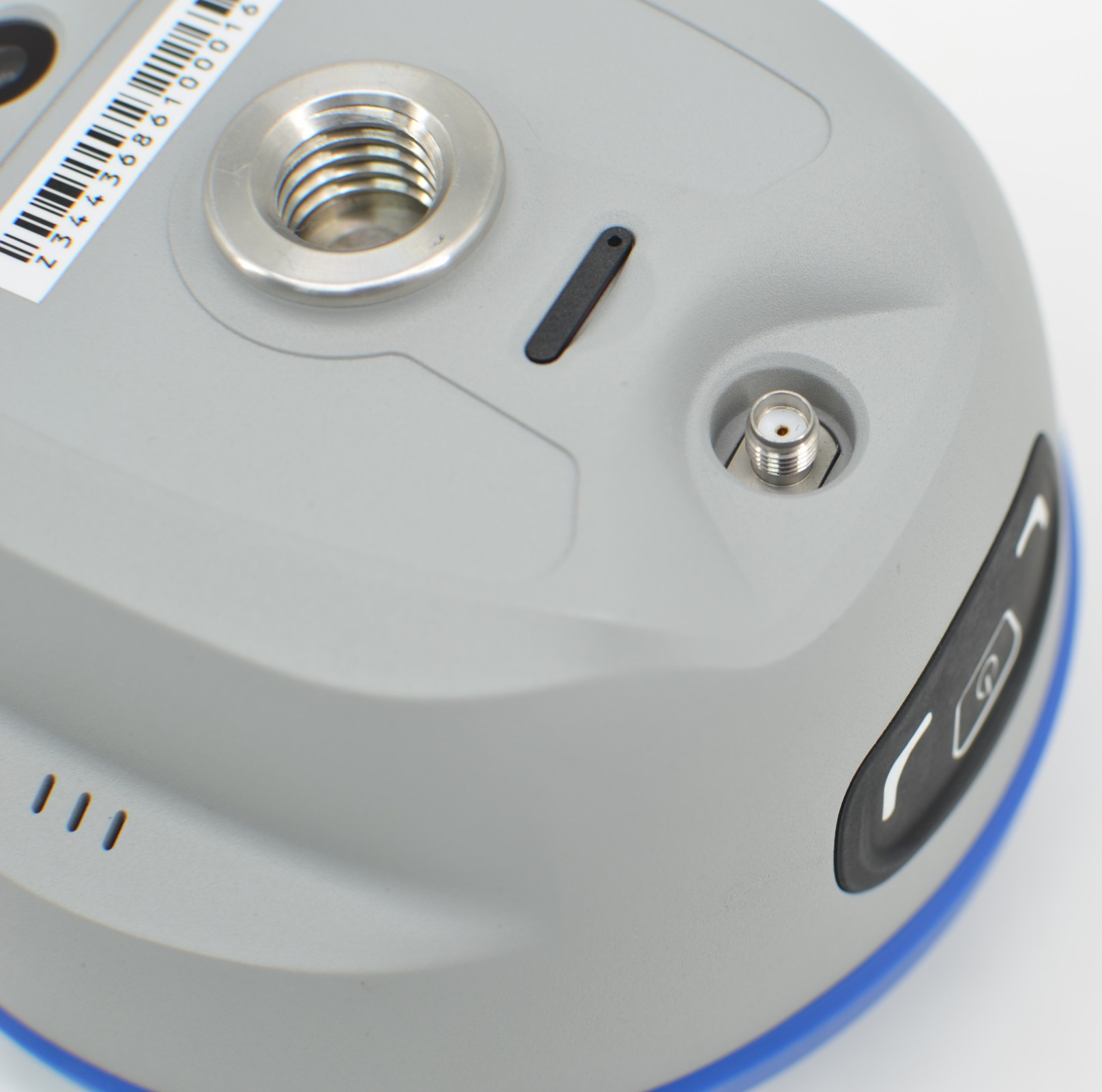
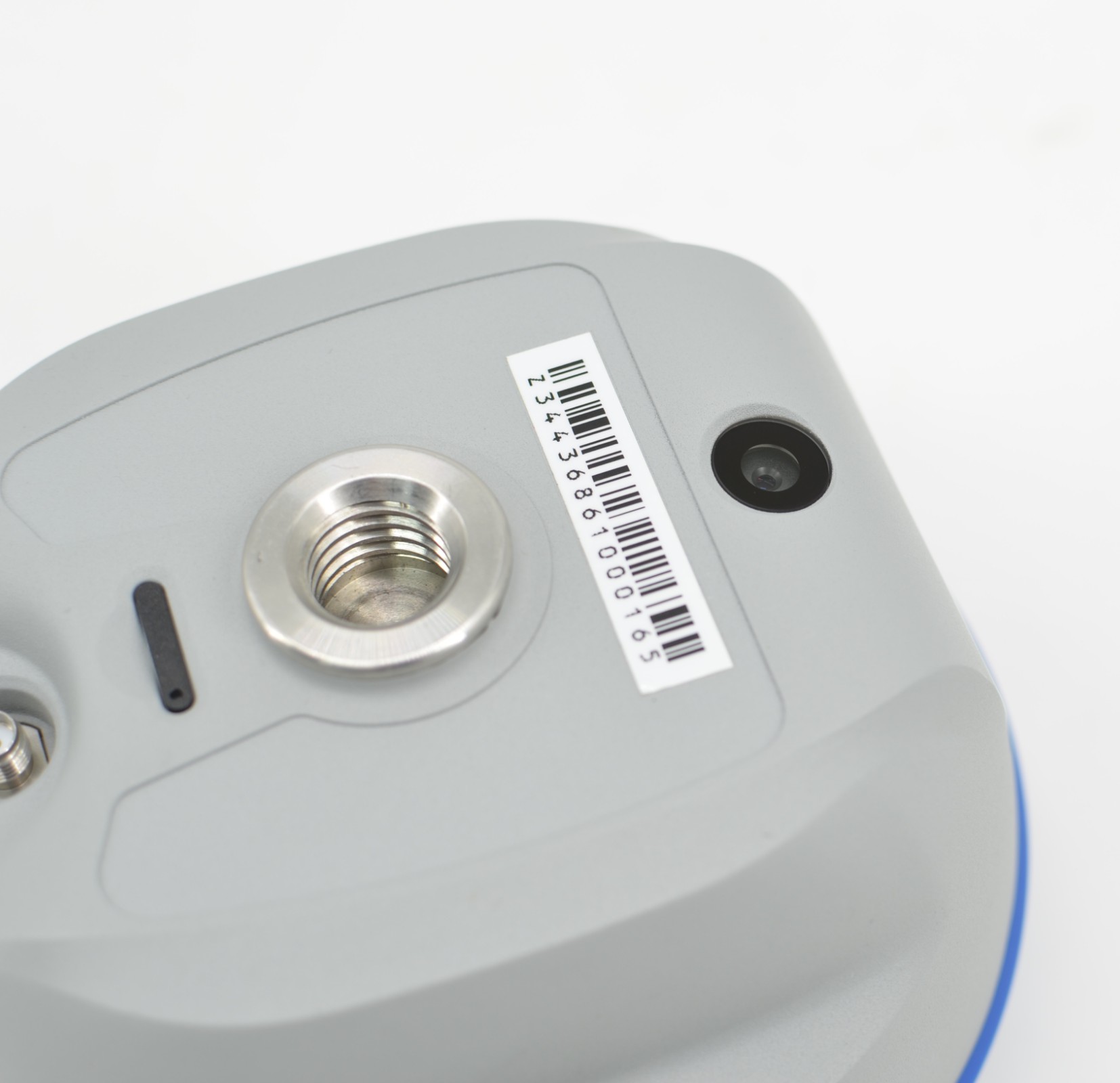
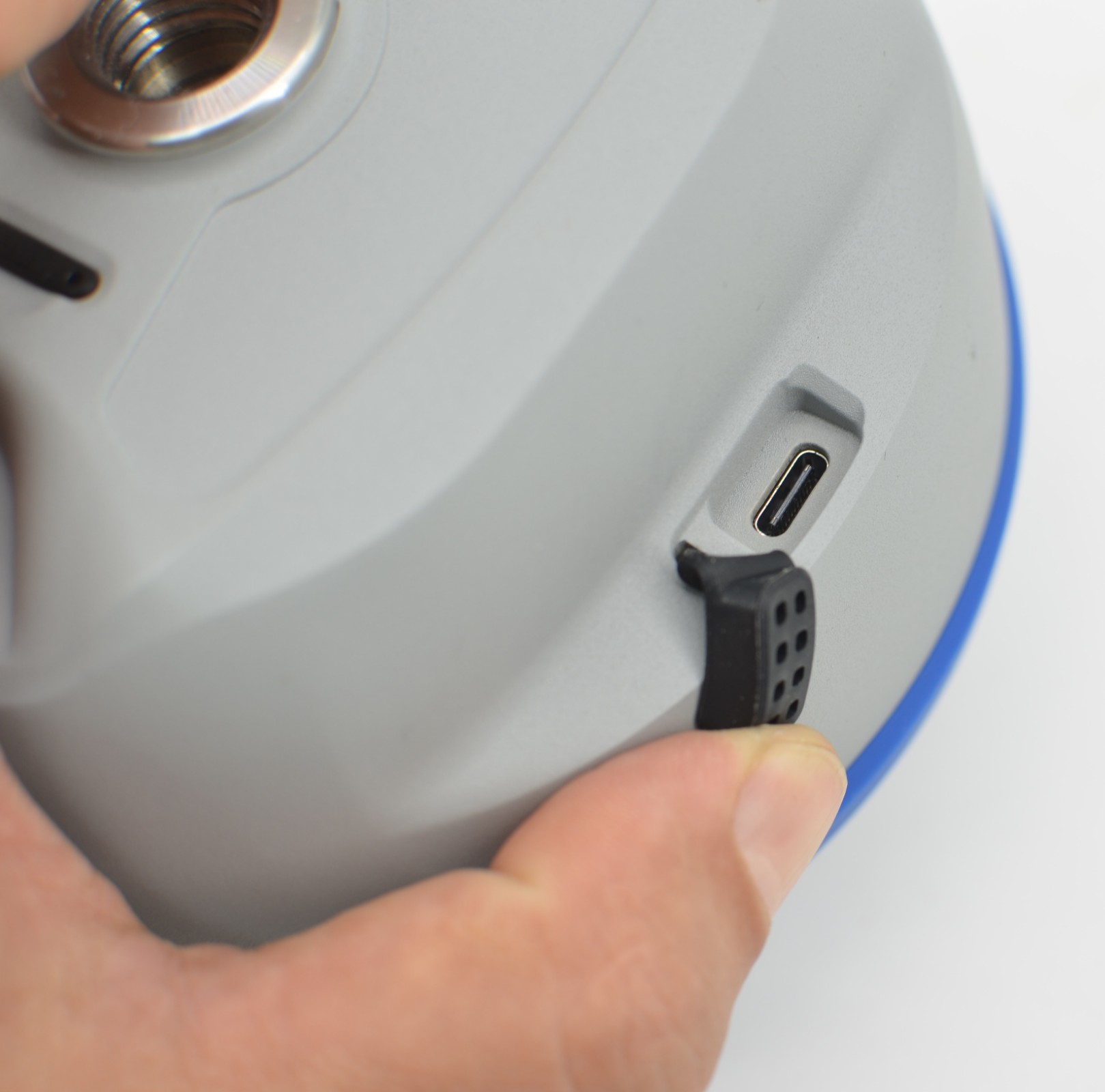
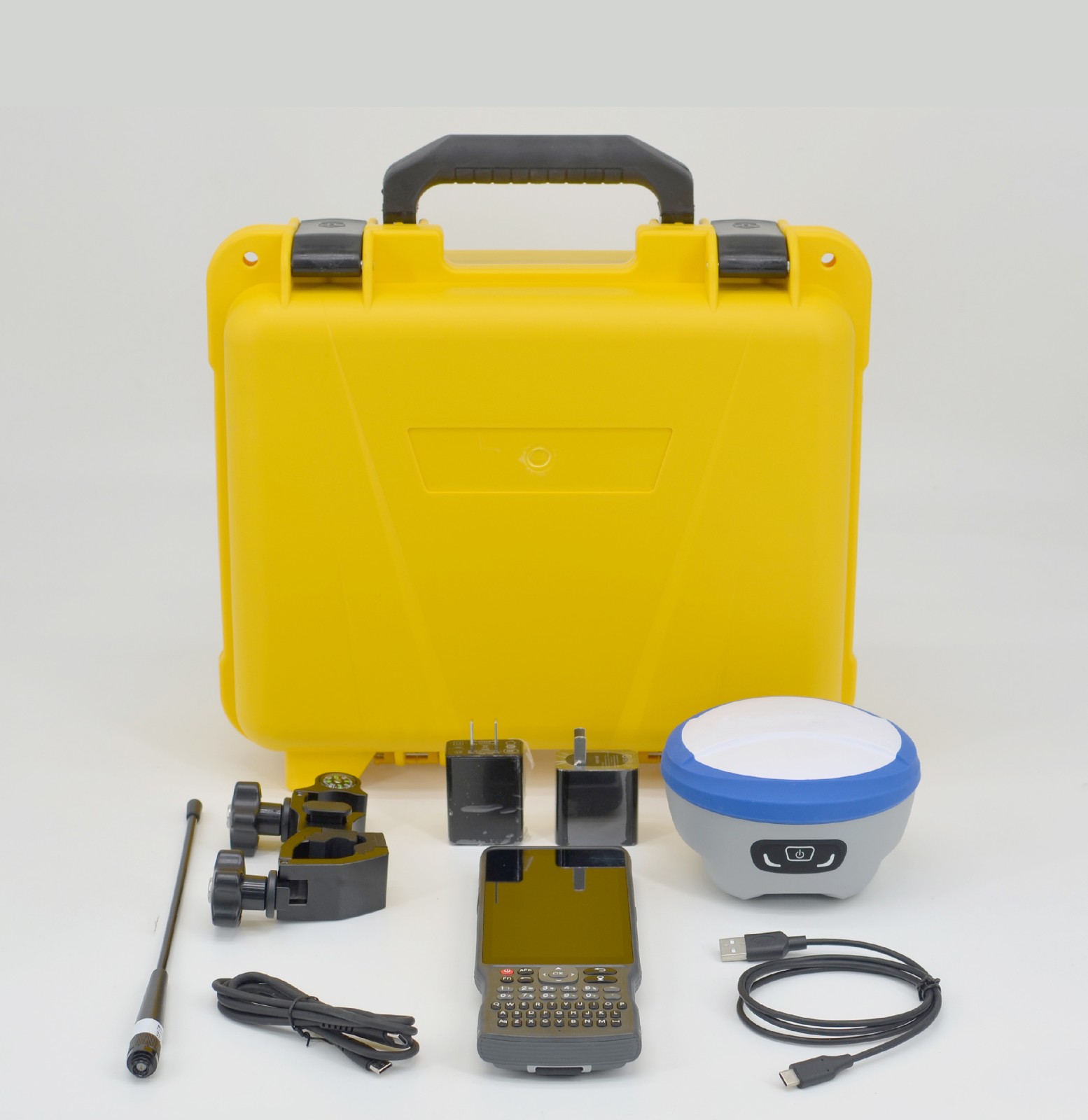
The DADI DG95 is a multi-functional RTK GNSS receiver powered by a Linux + ARM Cortex-A7 platform and a 1408-channel multi-constellation GNSS module. It supports BDS, GPS, GLONASS, Galileo, QZSS, SBAS and NavIC signals for flexible field positioning. The built-in IMU tilt compensation provides correction accuracy of less than 2 cm within a 60° tilt range, while the integrated camera supports AR real-time stakeout for visual guidance during field work. With 4G, Wi-Fi, Bluetooth and integrated radio, together with IP68 protection and more than 16 hours of typical Rover/GSM operation, the DG95 is designed for RTK surveying, stakeout and construction measurement.
The DADI DG95 is a multi-functional RTK GNSS receiver integrating 1408-channel multi-constellation positioning, IMU tilt compensation and AR real-time stakeout in one field receiver.
Powered by a Linux + ARM Cortex-A7 platform, the DG95 supports BDS, GPS, GLONASS, Galileo, QZSS, SBAS and NavIC signals. It also integrates 4G, Wi-Fi, Bluetooth, NFC and an internal transceiver radio for flexible RTK surveying and stakeout work.


The Linux operating system and ARM Cortex-A7 hardware platform provide the processing foundation for GNSS positioning, communication and field measurement functions.
The 1408-channel positioning module supports BDS, GPS, GLONASS, Galileo, QZSS, SBAS and NavIC signals for multi-constellation GNSS positioning.
The built-in inertial navigation module supports real-time tilt compensation. The specified tilt correction accuracy is less than 2 cm within a 60° tilt range.
The integrated AR camera supports real-scene visual guidance during stakeout, helping the operator locate stakeout positions through the field controller.
The DG95 supports 4G mobile networks, Wi-Fi, Bluetooth, NFC and an integrated 410-470 MHz transceiver radio for flexible correction-data and field communication workflows.
| GNSS System | Supported Signals |
|---|---|
| GPS | L1 C/A, L1C, L2P(Y), L2C, L5 |
| BDS | B1I, B2I, B3I, B1C, B2a, B2b |
| GLONASS | L1, L2, L3 |
| Galileo | E1, E5a, E5b, E6 |
| QZSS | L1, L2, L5 |
| SBAS | L1 |
| NavIC (IRNSS) | L5 |
| Hardware & GNSS | |
| Hardware Platform | ARM Cortex-A7 |
| Operating System | Linux |
| Channels | 1408 |
| Standard Output | NMEA-0183 |
| Correction I/O Protocol | RTCM3.X |
| Frequency | ≤20 Hz |
| Reacquisition Time | <1 s |
| Cold Start Time | <40 s |
| RTK Initialization Time | <10 s |
| Internal Noise Level | ≤1 mm |
| Phase Center Offset | ≤2.5 mm |
| Accuracy | |
| Single (RMS) | Horizontal: 1.5 m; Vertical: 2.5 m |
| DGPS (RMS) | Horizontal: 0.4 m; Vertical: 0.8 m |
| RTK (RMS) | Horizontal: ±(8 mm + 1 ppm); Vertical: ±(15 mm + 1 ppm) |
| Static Mode Precision (RMS) | Horizontal: ±(2.5 mm + 1 ppm); Vertical: ±(5 mm + 1 ppm) |
| Timing Precision (RMS) | 20 ns |
| Velocity Estimation (RMS) | 0.03 m/s |
| Tilt Correction | <2 cm within 60° |
| AR Stakeout | Horizontal: ±(8 mm + 1 ppm); Vertical: ±(15 mm + 1 ppm) |
| System & Connectivity | |
| Bluetooth | BR + EDR + BLE |
| NFC | Support |
| Wi-Fi | 802.11 b/g/n/ac |
| Mobile Network | LTE FDD: B1/2/3/4/5/7/8/12/13/18/19/20/25/26/28 LTE TDD: B38/39/40/41 WCDMA: B1/2/4/5/6/8/19 GSM: B2/3/5/8 |
| Integrated Radio | Frequency range: 410-470 MHz Power: 0.5 W / 1.5 W Protocols: TRIMTALK, TRIMMK3, SOUTH, TRANSEOT, SATEL, LORA Air baud rate: 4800, 9600, 19200 |
| Storage | 8 GB |
| Voice | Support |
| AR Camera | |
| Function | Supports AR real-scene stakeout |
| Sensor Size | 1/2.8 inch |
| Aperture | f/2.5 |
| Resolution | 1920 × 1080 |
| Field of View | 69.3° ±3° |
| Distortion | <0.38% |
| Battery, Environmental & Physical | |
| Battery | 7.4 V, 6500 mAh, 2P2S |
| Work Time | More than 16 hours under typical Rover/GSM operation |
| Charging | USB PD 15 V / 2 A, 5 V / 3 A |
| Operating Temperature | -25°C to +60°C |
| Storage Temperature | -40°C to +85°C |
| Shock Resistance | Can withstand a 1.5 m drop at normal temperatures |
| Protection Rating | IP68 |
| Materials | Magnesium alloy casing with ABS/PC plastic top cover |
| Dimensions | Φ134 mm × 86 mm |
| Weight | ≤0.75 kg |
Centimeter-level GNSS positioning for routine field surveying using RTK correction data.
Use IMU tilt compensation when the survey pole cannot be held perfectly vertical within the supported tilt range.
Use RTK coordinates and AR visual guidance to assist field stakeout and point location.
Operate as a GNSS rover using mobile-network corrections or the integrated radio data link.
The DG95 uses a 1408-channel GNSS positioning module.
It supports BDS, GPS, GLONASS, Galileo, QZSS, SBAS and NavIC signals.
The specified RTK accuracy is ±(8 mm + 1 ppm) horizontally and ±(15 mm + 1 ppm) vertically.
The specified tilt correction accuracy is less than 2 cm within a 60° tilt range.
Yes. The DG95 includes an AR camera that supports real-scene visual guidance during stakeout.
The specified work time is more than 16 hours under typical Rover/GSM operating conditions.




Contact our customer support
team 7×24 hours
WhatsApp:+86-18961173276